by Karen Petrauskas | Sep 30, 2021
Struggling with WHAT to POST on your social channels?
How much time do you waste thinking about what to write and create, when you could be spending the time busy in your business or doing something you love?!
This is where planning and preparation comes in.
Planning out your content will really help get you on track with creating awesome eye-catching, inspiring and motivational posts that attract your audience 100% and get them interacting with you and your brand, turning them into loyal and repeat customers.
Do you use a content calendar?
👉🏻 First, get a blank monthly calendar where you have space to fill in (you can message us to get our copy if it helps)
👉🏻 Then use our awesome awareness days calendar (free here) and find the days that you know your audience will resonate. Put them in the calendar and start to think about how you write content around those days ensuring that it is relevant to your followers.
👉🏻 Do you use hashtag days? #MondayMotivation for example.. schedule in a few of these and write a note with each one to get your mind already thinking about what type of post it will be.
👉🏻 The next steps is to fill in intermittent blocks with content that relates to your own business. This could be taken from your blog, your services or the expertise you can share.
👉🏻 Next you want to curate content from other reputable and reliable sources which you know would be beneficial to your audience. What sites do you read? Pass on what you like and plan a few of these posts across the month
You’ll then realise that there’s not many spaces left in your content calendar! And it probably didn’t take you much time in the grand scheme of your week. The next step would be to write the posts and get them scheduled in – but this could always be done another day – plan some time in during the week to do this.
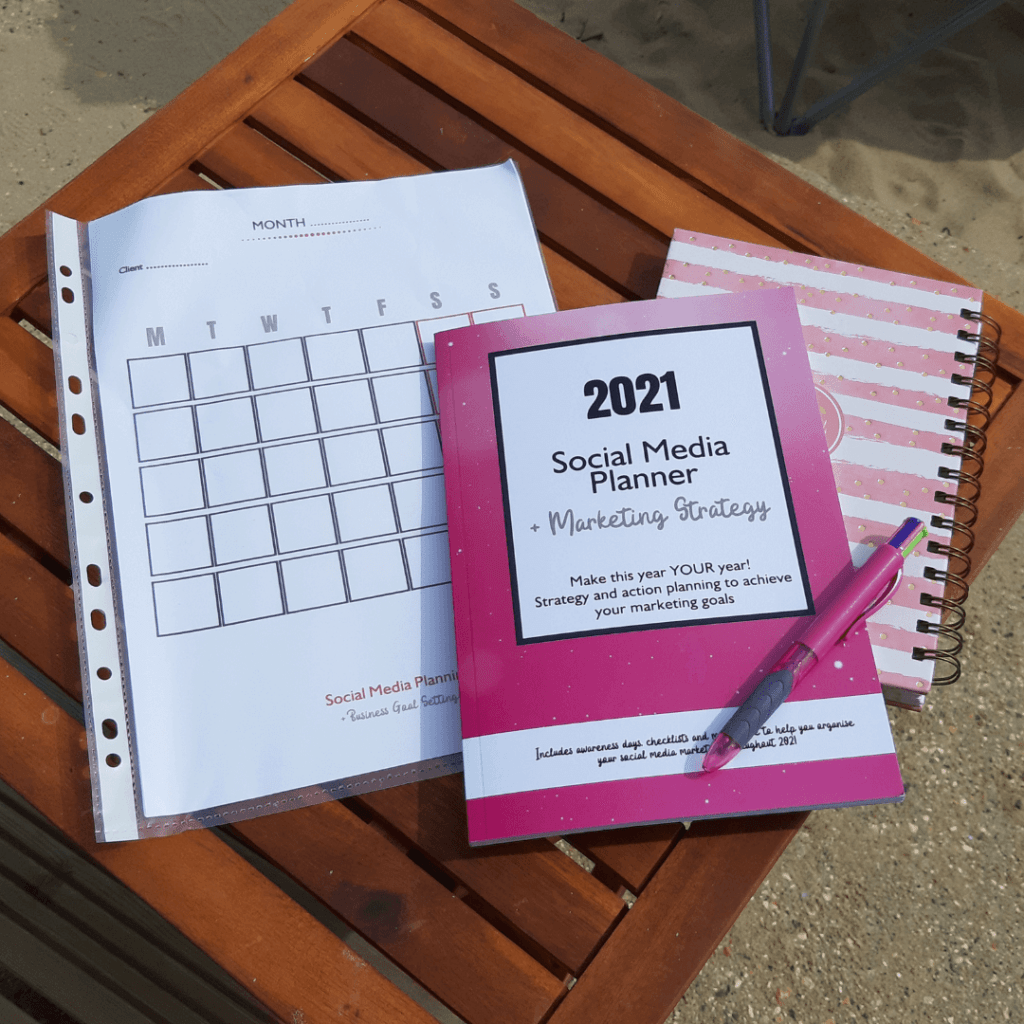
Ongoing social media plan
Each month, if you take time to plan and prepare, it takes away the pressure of finding content on a daily basis. You can mix and match the types of material you use, you can switch up the amount of awareness day that go in, and you can take inspiration from other things that are going on around you.
If you plan time to create your images, you may find that other things come to mind at the same time. When you don’t rush, there’s time to think things through and ensure that they’re completely on brand and following your values. When you rush, there’s more chance that you’ll use content just for the sake of it – that’s never a good plan and can easily result in your brand identity falling down.
What if you don’t enjoy content creation?
That’s ok – we all have the things that we love and the things that we’re good at – if we were all the same the world would be a very boring place! Sometimes you can be better off concentrating on what you’re best at, and finding someone else to do the bits in between. As a small business owner, you can’t do everything! Outsourcing or hiring at Virtual Assistant to fill these gaps can be an efficient way to move forward. Marketing is such an important part of your business and if you haven’t got the time to do a good job, it’s not going to the job it’s supposed to do.
Whatever your situation, social media planning is the best plan to creating a sustainable and growing channel. Plan ahead and get creative! Give it a go and let us know how you get on. And if you have any tips on finding WHAT to post across your social channels, drop a comment below.
Alternatively, if you’re still struggling to come up with content that is engaging and on-brand, or simply don’t have the time or resource to do it to a good standard, or even more – want to see bigger and better results than you’re currently getting – we’d love to chat with you. Hit the contact button and give us a bell and let’s see how we can work together.

by Karen Petrauskas | Aug 31, 2021
TARGETED marketing campaigns 🎯
The truth is that it is quite complex putting together a targeted marketing campaign, one that delivers the right message to the right people at the right time – it takes planning and preparation – and most of all, it takes a good strategy.
We’ve all heard of SMART goals, but this is something not to be pushed aside when planning a campaign – all the points are valid in creating the right results needed for goal achievement and so much more.
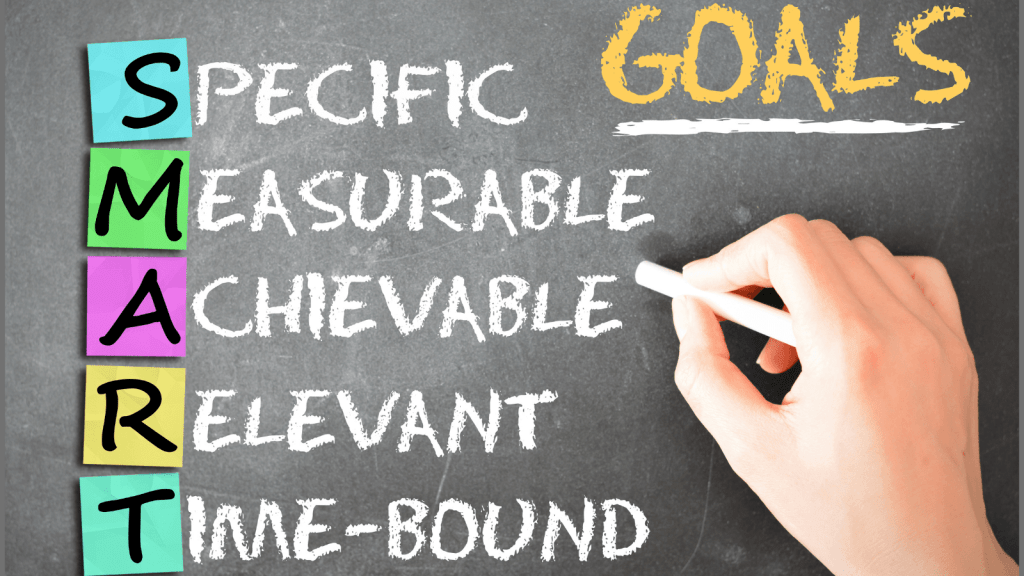
Let’s recap on what SMART means:
- Specific
- Measurable
- Achievable
- Relevant
- Time-bound
Specific – who, how, where, when… be specific in what you’re trying to achieve. Who needs to be involved, who are you targeting, how are you going to do it, what needs to take place, how much time do you have? Getting this one right on the outset can impact your results 100% – know and understand the details.
Measurable – what metrics are you going to use to know if you have met the goal? This makes a goal more tangible because it provides a way to measure progress.
Achievable – making the goal something that is attainable, not setting the bar too high but enough to be able to create steps to reach each portion.
Relevant – creating a goal that is in line and applicable to what you are trying to achieve.
Time-bound – we can all set goals but one that is realistic has a sensible and achievable time frame. If you’re going for a long-term goal, perhaps smaller actions and stages can be measured throughout the process.
What is a marketing campaign?
A marketing campaign is a project that consists of multiple events and actions that pull together with a start and end date and a missional goal.
Planning a marketing campaign
This is the most important step, as it defines your goals and vision into actionable steps that can be measured continuously. A plan enables you to work out what you need to do and how you’re going to do it. Spend time on the planning, it will be worth it! We see too often that people jump into marketing campaigns without putting the preparation in place and wonder why they’re not successful. You could have a tiny budget or an open-ended one, the amount you have to spend shouldn’t determine how much planning is needed – PLAN everything first.
What is your marketing campaign looking to achieve?
With the right planning, you can:
- Raise brand awareness
- Communicate a clear and concise message across different channel
- Attract leads and grow your business
Types of marketing campaigns
Obviously different campaigns will have varying outcomes, so always know what type of campaign you are looking for before you begin and then work towards the goals which that campaign will perform best at. What campaign will work best for you and what do you want to achieve?
- Increase sales
- Promote a seasonal offer
- Push a holiday campaign
- New product launch
- Email campaigns
- Social media
- Paid ads
What’s next in your marketing campaign?
Once you know what you’re working towards, brainstorm your ideas! The first thing that comes to your head isn’t necessarily what you have to do. Bounce ideas around with your team, friends or other business owners to establish some great goals and ideas.
Hopefully you’re now at a stage where you know what direction you want to head in, so it’s now time to determine which channel(s) you’ll use for your campaign. Look into the differences between channels and what they each have to offer, could you use more than one? Are there restraints, time restrictions, do you have enough funds, what does historical data tell you? Your strategy can help build strength in this, knowing what’s good or not. Pull everything together and create your campaign based on facts and figures, and with a plan of action.
Targeted marketing
Targeted marketing starts with defining ‘who’ specifically is a good fit for your product or service. It’s different from starting with ‘what’ the promotional message is and expecting audiences to react to it. It switches it around to determine exactly who it is you are wanting to reach right from the word go, and going straight after them with your advertising and marketing efforts.
Using paid marketing to a target specific audience is a beneficial way to great results with less expenditure than if you were to do an open / broad campaign. Utilising outside help and expertise can also be beneficial to hit the target in the bullseye.
Are you struggling to hit targets this year? It’s not been the normal 12-18 months for many business owners, so thinking outside the box and coming up with strategies that go above and beyond what your competitors are doing will help get you noticed. This is where our creativity and inspiration comes in, creating a plan that is designed and suited to your brand and targeting your ideal audience and potential customers.
Want to chat about what’s possible with a targeted marketing campaign? Get in touch and book your initial free consultation.
In the meantime, download our free Social Media Checklist – don’t forget the basics!
by Karen Petrauskas | Jul 31, 2021
Does your marketing have PURPOSE? 🏆
What drives you in your business, what impact do you want to achieve, what results do you want to see come to fruition? Is your business PURPOSE-DRIVEN?
There needs to be some passion behind the face of your social media channels – you’ve got a chance to make a difference and to get your business in front of a such a wide potential of customers, the impact you can achieve (when done right) is never-ending, but you’ve got to have the drive and ambition to get there and to make STUFF happen.
Have you got the passion?
If you’re not enthusiastic about your brand, who will be? Your marketing is the face of your business and your passion needs to be visible. Think of creative ways to showcase your passion – video, vlogs, behind the scenes stories – try to do something that’s different from the normal pattern you’d use in order for it to stand out.
SHOUT about what you’re doing, what makes you do what you do and why you love it so much. Get people to be passionate with you, embracing your values and pushing the awareness of your brand.
Back to basics
Let’s go back to the basics from when you first put a marketing strategy together, and also considering that we are coming through a pandemic and everything is looking a lot different than it was two years ago… think about your business plan and goals; can you answer these questions:
- Where do you see your business at the end of this year?
- Where do you see your business in 5 years from now?
- What people do you want to influence or affect?
- Who can benefit the most from what you have to offer?
- What makes you unique?
Now, using each of these points, map out what marketing methods would be best to get these points in front of your audience, and how you can create engaging content that reiterates the message you want to get across.
- Can you stick to organic posting?
- Could you be doing more?
- Can you use stories or another channel to reach a different type of audience?
- How about paid advertising?
Your purpose is what keeps the business going – it gives it a mission and direction to reach the people you want to help.
Strategy example
Make sure you have a clear goal in marketing, that way you can measure if it happens or not. If one of your aims is to see an increase of 5% to your website traffic, for example, you would need to put in place steps to drive the extra traffic. What can you do to send more people there? Would this include more call to actions on your organic posts? Could you implement some paid advertising to target specific interested parties?
If you want to increase your engagement by 20% on your social channels, you could look at content that encourages engagement, i.e., polls, asking questions, asking for feedback etc.
If you look at the bigger picture, when you increase social media activity, this will build trust and authenticity. When followers start to trust and like your content, they are more likely to head over to your website when you direct them. Once they’re on your site, what can you do to keep them there? Have a goal in mind for when they are browsing your website and ensure that navigation is easy. With this approach, and taking one step at a time, you are aiming to hit both your targets with one sweep.
From here, it’s a case of measuring the activity on your channels and determining if you are gaining an increase. If not, can you do more?
Be a risk taker in marketing
Don’t be afraid to try new things – risk takers are more likely to get results because they’re not afraid to try something that ‘may not’ work – but if it does… winner!
“The biggest risk is not taking any risk… In a world that is changing really quickly, the only strategy that is guaranteed to fail is not taking risks.” – Mark Zuckerberg
What’s your purpose and how can you use social media marketing to get there?
We love working with purpose-driven organisations who have a clear mission and goal – and we love helping these people achieve their goals through social media. So, if you’re looking to get ahead and make your mission fly, let’s talk about a strategy and action plan. Get in touch today 🤙
While you’re here, checkout our FREE gift to you: our Social Media Checklist – don’t forget the basics! 👇🏻

by Karen Petrauskas | Jun 26, 2021
Do you have a blog on your website?
- Why should you have a blog?
- Not enough time to blog?
- What’s the point of blogging?
- I can’t write blog posts
Which question are you asking right now?
Some small business owners struggle with keeping up with a blog on top of everything else they have to [usually] solely manage.
And larger organisations don’t always use the resources they have to create a blog as their teams are busy doing other things.
BUT having a blog on your website is extremely beneficial for these reasons…
- A blog drives traffic to your website
- Traffic turns into leads
- Provide knowledge and expertise and create authority
- Help solve problems, whilst building trust
- Build relationships with fellow readers
- Boost social media efforts
- Blogging is an amazing way to drive traffic to your website and increase your SEO
Here at KJP Creative we use our blog to help answer questions that people are asking, in order to give them value and help them in their online marketing journey. It ticks more than one box when it comes to engaging with an audience, answering the common questions that customers have, and providing content that can help other business owners in topics that they may be contemplating within their business.
Blogging also helps us to keep up to date with relevant news and trends, and keeps us on our toes in terms on knowledge and expertise. We also love to be able to share how-to’s, advice and tips with our audience, which is a great way to engage with people who are searching for solutions.
Blogging is a must for SEO
Absolutely, search engine optimisation helps to create fresh and exciting new content on a regular basis and will do wonders for Google! It will help to raise your profile, get you appearing in more search results, and help to improve that search listing. Want to be on page 1 of Google… get blogging!
Create fresh blogs / content
When we say ‘fresh’ content, that’s what we mean, not just updating a few lines on a page or swapping out an image, we mean creating regular new pages with lots of juicy content that the search engines can use when people are searching online for your products or services.
Use keywords in your blog posts
Ensure that you’re using keywords within your content and that it is all relevant to what you are writing about, however, the last thing you want to do is create top heavy keywords throughout the whole post, without relevance to the specific content. It will not work! Research your topic, understand the audience and what they might be looking for and typing into Google when they’re searching for a topic. Use free keyword tools to generate ideas to help you incorporate these into your posts.
Always use good blog titles and headlines
Again, a must when it comes to blogs and articles on your website. You want the post to be found and by creating a title that is directly what someone maybe searching for, gives you more of a chance to be found. This is also said for the meta data that goes with title. What people see and read on their search feed will determine whether or not they will click through.
What will entice them, what will make them click, what urgency or interest can you serve them in order for them to choose your post over another?
Having a blog on your website and utilising specific keywords gives so much more opportunity for your business to be discovered and also when it is, providing information-rich content will go a long way in establishing trust and reputation for your brand.
Not sure what to blog about?
If you’d like to blog but not sure where to start, why not make a list of all the questions that people ask you within your business. These questions can be turned into full blown answers, which can be written, structured to incorporate other links and helpful advice, and put onto your website.
If you’ve not got the time to blog, that’s ok. Many businesses don’t create the content themselves but instead they use people have. This is a perfectly normal practice for business owners of all sizes. Content creators are experienced in researching a given topic and finding the best way of putting this down in writing for others to read and act upon. Perhaps you’ve got lots of topic ideas but simply don’t have the time to put it into action – outsourcing your blog is definitely a solution.
There’s always a way if you want to make blogging happen and to give your business the extra credibility it deserves -, and with the added bonus that blogging is such a great way to boost SEO and search result listing, you’d be mad not to take advantage 😆
Get in touch if you’d like to find out more out blog and content marketing services.
In the meantime, why not download our free social media checklist to help ensure you’re ticking all the boxes when it comes to your social media marketing… enjoy!

by Karen Petrauskas | May 28, 2021
Are you struggling to create engagement on your social media channels?
Here’s a secret… you don’t have to dance, sing or point to word bubbles on Reels or TikTok to create engagement on your social media channels. Of course, if you want to then that’s absolutely fine! But for those less comfortable with jigging in front of a camera, there are other ways to make the magic happen. Yes, videos do help build on engagement, but they don’t have to be cheesy – always stay on brand.

If you’re looking to grow your following on social media, create content that is worthy of all the hard work you put in, whilst staying professional and in line with your brand’s mission and identity – it all comes down to strategy. A marketing strategy gives you clear guidance, a path to follow and a goal to work towards. So, how do you put together a social media strategy?
Here are our 8 tips for creating engagement that goes way beyond a 60 second Reels jingle and will keep your professionalism still intact!
Be original.
It can be hard to create content that is 100% unique, yes? There is so much competition out there that you’re bound to cross paths with someone. However, the way to get around this is to be original. Put your own spin on a topic, create content from your point of view, with your personality – as if you’re talking to the reader. Make it completely original content, written from your perspective.
Tell a story.
We all have a story to tell, you might not think that yours is very interesting – but it’s YOUR story. Business is built on trust, people buy from people they trust, people like to understand and see behind the scenes and what happens behind the face and voice of a brand. This is your chance to shine and to tell everyone about what you are doing, why you are doing it and the mission that you have.
Be consistent.
Always show up when you’re expected. If you create daily content, create daily content. Don’t try it for a week and give up the next. Always find a balance to what you can do and what works, and still to it. This is where content planning comes in handy.
Add value.
This goes without saying. Everything you produce, say or do, should add value to the recipient. Try not to think about what you might be giving away for free – the more you give, the more you will get in return. If someone thinks they are getting value, they will keep coming back and more importantly, they will tell others what they have discovered. Always give without doubt, offer advice, guidance, even things that will give them a step-up, the more they like what they see, the more you will see them back for more.
Keep on brand.
Your brand is your identity, it makes you unique and stand out in a crowded room. Create content that is easily recognisable and true to your mission. Think about your tone of voice, image and type of content, logos and personas, frequency… all things that make your brand recognisable and unique.
Solve problems.
People are searching and seeking for answers. Here’s your chance to help someone. Understand your audience and give them answers to the solutions they are seeking. Be there in their times of need or pain points – show up when you say you’re going to, and give them something they can take away right there and then, which will make them feel like they’ve achieved what they need to.
Create eye-catching content.
There’s no point in creating content that no one is going to see. It’s a waste of your valuable time and it benefits no one. What would you want to see if you were on the other side? What would make you stop and look? Start there. Create content that touches on an emotion, or tells a story, or that speaks directly to a circumstance – images need to make the audience stop scrolling and read what you have to say.
Be passionate.
Absolutely! If you don’t love what you’re doing, why should anyone else? This is your chance to share your passions, your ambitions, your desires, your visions, your goals… and to make a difference. Love your social channels, the followers, the people who interact – and give them a reason to love your brand too.
When and if you start to implement a strategy into your marketing and follow these basic rules about how to find relevant and interested parties – then you will see results happen. And if you’re not sure where to start or how to do any of these things… ask!
Are you ready? 🚀
Get in touch and let’s have a conversation on how your business can benefit from high engaging content.
Be sure to grab our FREE 2021 Social Media Awareness days calendar while you’re here to help discover more ways of engaging with your audience…